History 328
Fall 2002
History of the Soviet Union since 1917
Discussion Questions for Part II of Eduard Dune’s Notes of a Red Guard
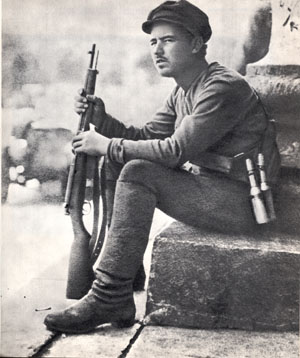
I. Dune, Red Guard, Part II
1. What do Russians expect the revolution will bring, now that the Soviets/Bolsheviks have taken power? Dune? Peasants on the Don? His fellow workers back in Tushino? His fellow soldiers? Political commissars?
2. What are the major "sides" in Dune's civil war? What are they fighting for?
3. How empathetic is Dune with others -- with people different from him? (peasants, intellectuals, Cossacks, Whites, Dagestani communists)
4. What are the stakes for the Red Army and Soviet power in Dagestan? How does the Russian revolution affect the non-Russians of the empire?
II. Historical debate: the Green Movement
5. How do Dune and the four histories (Chamberlin, CPSU, Figes, and Brovkin) address the role of peasants in the revolution? Who if any is most sympathetic to peasant aspirations and life? What are the points of disagreement?
6. Which of these sources are more sensitive to differences between Russia and Ukraine?
7. How do each of the sources address what Figes calls four main types of peasant resistance: spontaneous risings, organized peasant risings, guerilla warfare, and banditry? How does Dune interpret his encounters with armed peasants?
8. How do the four histories and Dune assess the significance of the Green movement? (Mindless anarchy, insignificant, nationalist alternative to Russian imperialism, serious alternative to Bolshevik power, all of the above, none of the above?) Why is mention of the Greens absent from the relevant section of the official History of the Communist Party of the Soviet Union?
9. How do the five accounts compare in perspective, method, factual accuracy, sources? Does the time of writing (1935, 1939, 1989, 1994, and in Dune's case, 1951) make a difference in their interpretations? What accounts for differences in what historians choose to emphasize?